
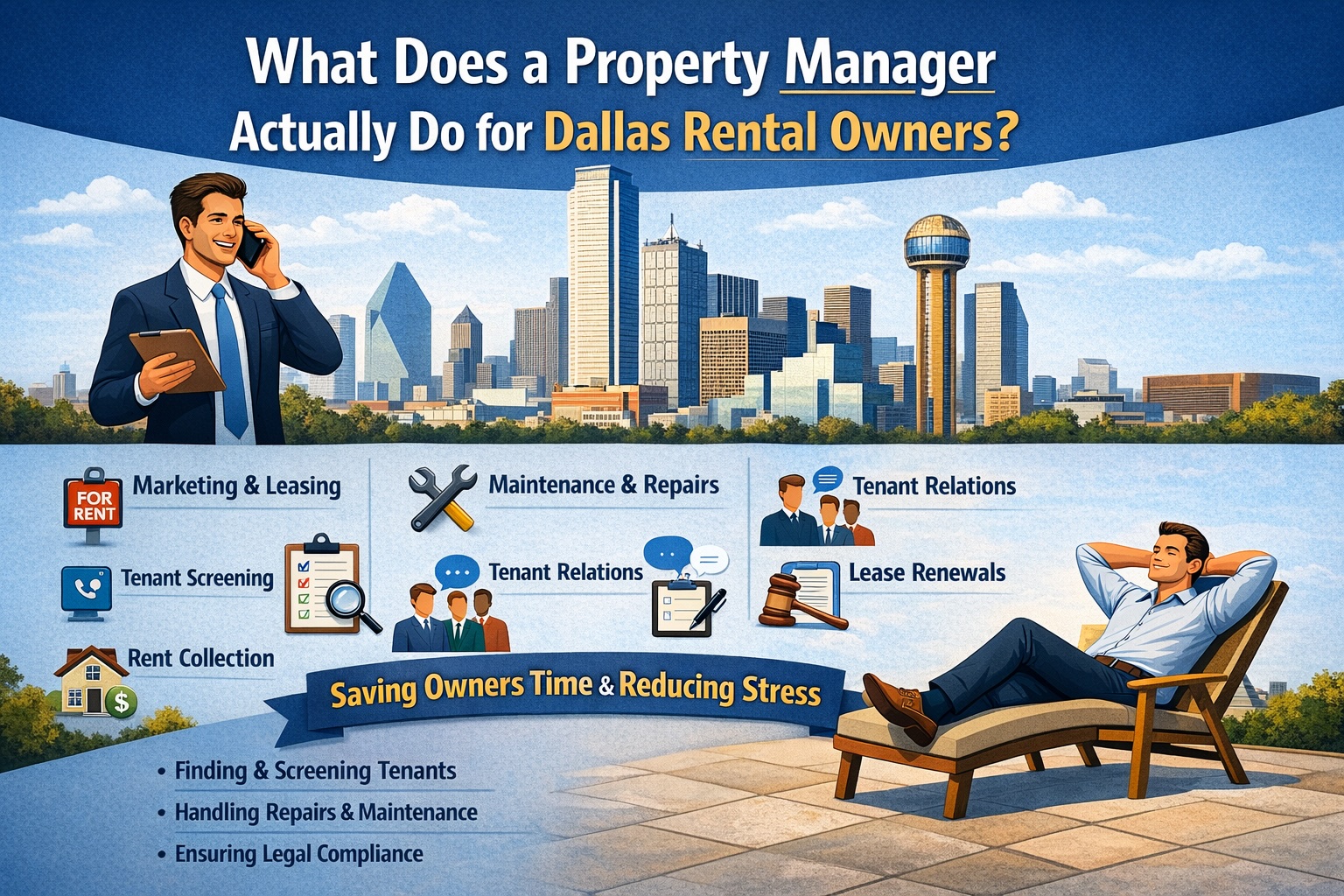
A property manager handles the day-to-day operation of a rental property on behalf of the owner. This typically includes marketing the property, screening tenants, collecting rent, coordinating maintenance, handling lease renewals, and ensuring compliance with local laws. For Dallas rental owners, a property manager acts as the primary point of contact for tenants and manages the operational details so the owner can focus on the investment itself.
Below is a breakdown of the major responsibilities.
1. Marketing and Leasing the Property
When a property becomes vacant, the property manager prepares it for the market and finds qualified tenants.
Typical leasing responsibilities include:
- Determining appropriate rental pricing
- Creating property listings and marketing the home online
- Scheduling and conducting showings
- Responding to inquiries from prospective tenants
- Processing rental applications
- Screening tenants for credit, income, and rental history
- Verifying cash deposits into the applicant's bank account
- Screening for fraudulent applications
- Preparing lease agreements and collecting deposits
A strong leasing process is one of the most important parts of rental ownership because selecting the wrong tenant can lead to missed rent payments, property damage, or eviction.
2. Tenant Screening
Property managers perform detailed screening to help reduce risk.
A typical screening process includes:
- Credit report review
- Income verification
- Employment verification
- Criminal background check
- Rental history review
- Landlord reference checks
Professional screening helps ensure tenants can afford the rent and have a track record of paying on time.
3. Rent Collection and Financial Management
Once a tenant moves in, the property manager handles rent collection and financial tracking.
This usually includes:
- Online rent payment systems
- Rent reminders and follow-ups for late payments
- Enforcing late fees per the lease
- Monthly owner statements
- Year-end financial reporting
For many DFW landlords, consistent rent collection is one of the biggest reasons they hire a property manager.
4. Maintenance and Repairs
Property managers coordinate maintenance and repairs for the property.
This includes:
- Handling tenant maintenance requests
- Dispatching licensed contractors
- Managing emergency repairs
- Preventative maintenance scheduling
- Repair approvals with the owner when needed
Most professional property managers have networks of trusted vendors, which can often reduce repair costs and response times.
5. Tenant Communication and Problem Resolution
Property managers serve as the main point of contact for tenants.
This includes handling:
- Maintenance requests
- Neighbor complaints
- Lease questions
- Policy enforcement
- Tenant disputes
By acting as the intermediary, property managers prevent owners from being involved in day-to-day tenant issues.
6. Lease Renewals and Rent Adjustments
When a lease approaches expiration, the property manager handles renewal negotiations.
Typical responsibilities include:
- Evaluating market rent levels
- Offering lease renewal options
- Adjusting rent based on market conditions
- Preparing new lease documents
Regular rent adjustments help ensure the property stays aligned with the Dallas rental market.
7. Legal Compliance and Risk Management
Rental properties must comply with federal, state, and local regulations.
Property managers help owners comply with laws such as:
- Fair Housing regulations
- Texas Property Code requirements
- Security deposit handling rules
- Local housing and safety regulations
While property managers are not attorneys, experienced firms help reduce compliance risk for owners.
8. Handling Evictions (When Necessary)
If a tenant stops paying rent or violates the lease, the property manager coordinates the eviction process.
This usually includes:
- Issuing required legal notices
- Filing eviction paperwork
- Coordinating with attorneys if needed
- Managing the move-out process
Evictions are relatively rare with strong tenant screening but are an important part of risk management.
Is Hiring a Property Manager Worth It?
Many Dallas rental owners hire property managers because it saves time and reduces stress.
Property management can be particularly valuable if you:
- Own multiple rental properties
- Live outside the Dallas area
- Do not want to handle tenant calls and maintenance
- Want a more passive investment experience
Management fees in Dallas typically range from 7% to 10% of collected rent, depending on the services provided.
Property Management for Dallas Rental Owners
Professional property management allows rental owners to focus on the long-term performance of their investments while a local expert handles the daily operations. In other words, a property manager allows a property owner to be an asset manager, instead of a day-to-day manager.
For many Dallas landlords, the right property manager turns rental property ownership from a hands-on job into a more passive investment.