
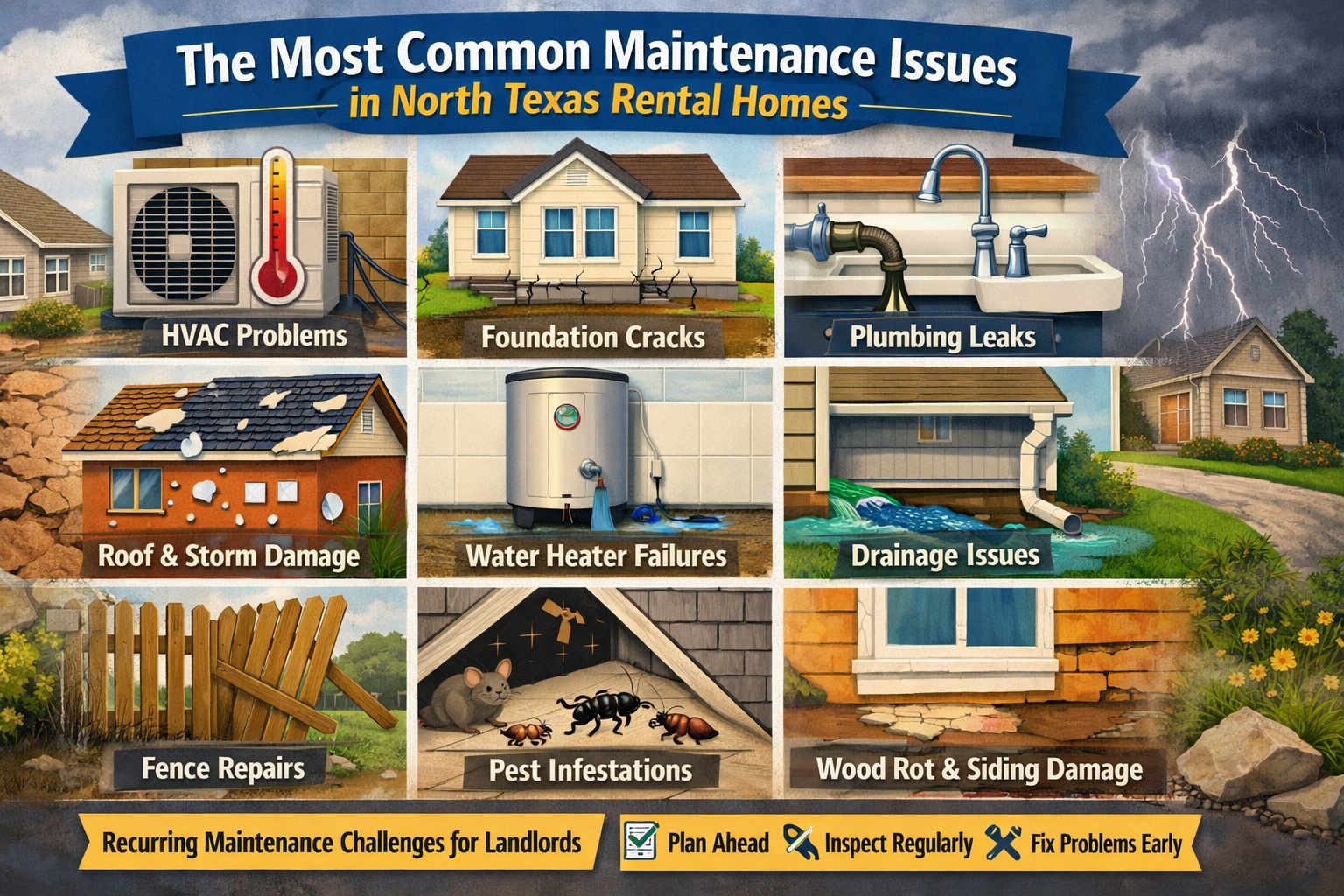
The Most Common Maintenance Issues in North Texas Rental Homes
Owning a rental home in North Texas means dealing with a maintenance profile that is a little different from other parts of the country. The heat is intense, the soil moves, storms can be severe, and many homes in the Dallas–Fort Worth area were built during periods of rapid suburban growth. The result is a fairly predictable set of repair issues that come up again and again.
For landlords, the good news is that most major maintenance surprises are not truly random. They are usually recurring problems that can be anticipated, inspected for, and budgeted around. If you understand the most common maintenance issues in North Texas rental homes, you can reduce vacancy, protect the property, and avoid turning small repairs into major expenses.
1. HVAC Problems
Air conditioning is not optional in North Texas. During the summer, HVAC systems work hard for long stretches, and failures tend to happen at the worst possible time.
Common HVAC issues include:
- Condensate drain line clogs
- Refrigerant leaks
- Frozen evaporator coils
- Blower motor failures
- Dirty filters causing poor airflow
- Capacitor and compressor failures
In rental homes, many HVAC problems start with deferred filter changes or a system that is already near the end of its useful life. Tenants may not notice early warning signs until the unit stops cooling entirely.
Owners should expect higher HVAC repair volume in North Texas than in milder climates. Preventive servicing before peak summer season can meaningfully reduce emergency calls.
2. Foundation Movement and Related Cracks
North Texas expansive clay soil is one of the biggest long-term maintenance factors for single-family rentals. Soil expands when wet and contracts during dry periods, which can cause slab movement over time.
This often shows up as:
- Interior sheetrock cracks
- Exterior brick cracks
- Doors that stick or will not latch properly
- Windows that become harder to open or close
- Gaps at trim or flooring transitions
Not every crack means a major structural problem, but cosmetic cracking is common and recurring. In many homes, the practical maintenance issue is less about immediate structural failure and more about ongoing movement causing visible defects that tenants notice.
Good drainage and consistent moisture management around the foundation can help reduce more serious movement over time.
3. Plumbing Leaks and Drain Backups
Plumbing is another frequent source of service requests in North Texas rentals. Some issues are normal wear and tear; others come from aging supply lines, shifting foundations, or tenant use patterns.
Common plumbing issues include:
- Leaking faucets
- Running toilets
- Garbage disposal jams
- Under-sink leaks
- Sewer line backups
- Water heater failures
Drain stoppages are especially common in rental properties. Hair, grease, wipes, and food waste cause many preventable calls. On older homes, sewer lines may also have root intrusion or partial collapses.
Even small plumbing leaks matter because they can quickly create cabinet damage, flooring issues, or mold concerns if they are not addressed promptly.
4. Water Heater Failures
Water heaters are one of the most predictable replacement items in a rental home. In North Texas, many are installed in garages or utility closets, and once they reach a certain age, leaks become much more likely.
Typical water heater problems include:
- Pilot light or ignition failures
- Thermostat issues
- Sediment buildup
- Pressure relief valve leaks
- Tank failure and active leaking
A failed water heater is disruptive for tenants and can become a much larger claim if it leaks for long enough. Owners should track installation age and plan proactively for replacement rather than waiting for total failure.
5. Roof Leaks and Storm Damage
North Texas storms bring hail, high winds, and heavy rain. That makes roofing a recurring concern for landlords, even when the home looks fine from the ground.
Common roof-related issues include:
- Missing or lifted shingles
- Minor flashing failures
- Leaks around penetrations
- Gutter damage
- Fence damage after storms
- Water intrusion from wind-driven rain
Sometimes the real problem is not the roof covering itself but a small failure point that only shows up during severe weather. After major storms, it is worth checking not just the roof, but also gutters, downspouts, fences, and any signs of interior water staining.
6. Drainage and Grading Problems
A lot of expensive North Texas repairs begin with poor drainage. If water is not moving away from the home properly, it can contribute to foundation movement, landscaping erosion, standing water, and even interior leaks.
Warning signs include:
- Water pooling near the slab
- Erosion around downspouts
- Negative grading toward the house
- Muddy low spots in the yard
- Water intrusion near doors or garage areas
Drainage issues are easy to ignore when the weather is dry, but they often become obvious during heavy rain. For rental owners, this is one of the highest-value categories to address early because it can affect so many other systems.
7. Fence and Gate Repairs
Wood fencing takes a beating in North Texas. Heat, storms, shifting soil, and normal aging all contribute to frequent repairs.
Common fence issues include:
- Leaning posts
- Broken pickets
- Sagging gates
- Rot at the bottom of boards
- Wind damage after storms
In many rental neighborhoods, fence condition matters not just for function but also for curb appeal and leasing performance. A damaged gate or visibly leaning fence can make an otherwise solid property feel poorly maintained.
8. Exterior Wood Rot and Siding Deterioration
Many North Texas homes have trim, fascia, siding elements, or garage door surrounds that gradually deteriorate from heat, moisture exposure, and deferred paint maintenance.
This usually shows up as:
- Rotting trim boards
- Soft fascia
- Peeling paint
- Swollen or damaged siding
- Deterioration around windows and doors
These repairs are often postponed because they do not seem urgent, but they can expand if moisture continues to get into exposed areas. What starts as minor carpentry and paint work can turn into more involved exterior repair.
9. Appliance Breakdowns
In most rental homes, appliance maintenance is inevitable. Even when tenants are careful, normal wear accumulates.
The most common appliance issues include:
- Dishwasher drainage problems
- Oven igniter failures
- Refrigerator cooling issues
- Washer hose leaks
- Dryer heating element failures
Appliance repairs are usually not catastrophic, but they can create tenant frustration quickly. Fast response matters because these are the issues residents experience most directly in daily life.
10. Pest and Critter Entry Issues
North Texas rental homes often deal with ants, roaches, rodents, wasps, and occasional wildlife entry. Some of this is seasonal, and some comes from gaps in the home’s exterior.
Common causes include:
- Unsealed penetrations
- Damaged door sweeps
- Gaps at garage doors
- Attic or roofline openings
- Poor vegetation control around the home
Pest complaints are often partly a housekeeping issue and partly a property condition issue. The most effective approach is to handle both: address access points while also setting clear tenant expectations for cleanliness and reporting.
11. Smoke Detector, GFCI, and Minor Electrical Issues
Not every maintenance call is expensive. A steady stream of rental work comes from smaller safety and electrical items:
- Dead smoke detector batteries
- Worn outlets
- Tripped GFCIs
- Non-functioning light fixtures
- Ceiling fan issues
- Breaker trips
These are usually straightforward, but they matter because they affect habitability and tenant confidence. Small unresolved issues can make residents feel the property is not being cared for, even when the larger systems are fine.
Why These Problems Matter for Landlords
The biggest mistake many rental owners make is treating maintenance as unpredictable. In North Texas, it is actually fairly pattern-based. HVAC, plumbing, drainage, foundation movement, roofing, and exterior wear account for a large share of recurring issues.
That matters because better planning leads to better outcomes:
- Fewer emergency repair calls
- Lower turnover-related stress
- Better tenant retention
- Fewer deferred repairs becoming major costs
- More accurate maintenance budgeting
A well-run rental property does not avoid maintenance. It stays ahead of it.
How Owners Can Reduce Maintenance Surprises
Landlords cannot eliminate repairs, but they can reduce the frequency and severity of problems by focusing on a few practical habits:
- Service HVAC systems regularly
- Replace water heaters and aging equipment before failure
- Inspect roofs and drainage after major storms
- Address plumbing leaks immediately
- Watch for early signs of foundation movement
- Keep gutters and downspouts functioning properly
- Seal exterior entry points for pests
- Repaint and repair exterior wood before rot spreads
The best rental owners in North Texas tend to think in systems, not one-off fixes. A clogged gutter is not just a gutter problem. It can become a drainage problem, a foundation problem, and eventually an interior repair problem.
Final Thoughts
North Texas rental homes are durable investments, but they come with a distinct maintenance profile. The most common issues are not mysterious: air conditioning strain, plumbing leaks, foundation-related cracking, storm damage, drainage trouble, fence wear, and exterior deterioration are all part of the landscape.
For owners, the goal is not to avoid maintenance altogether. It is to identify recurring issues early, budget for them realistically, and respond before minor problems become expensive ones.
A rental home that is maintained proactively will usually lease better, retain tenants longer, and perform more predictably over time.